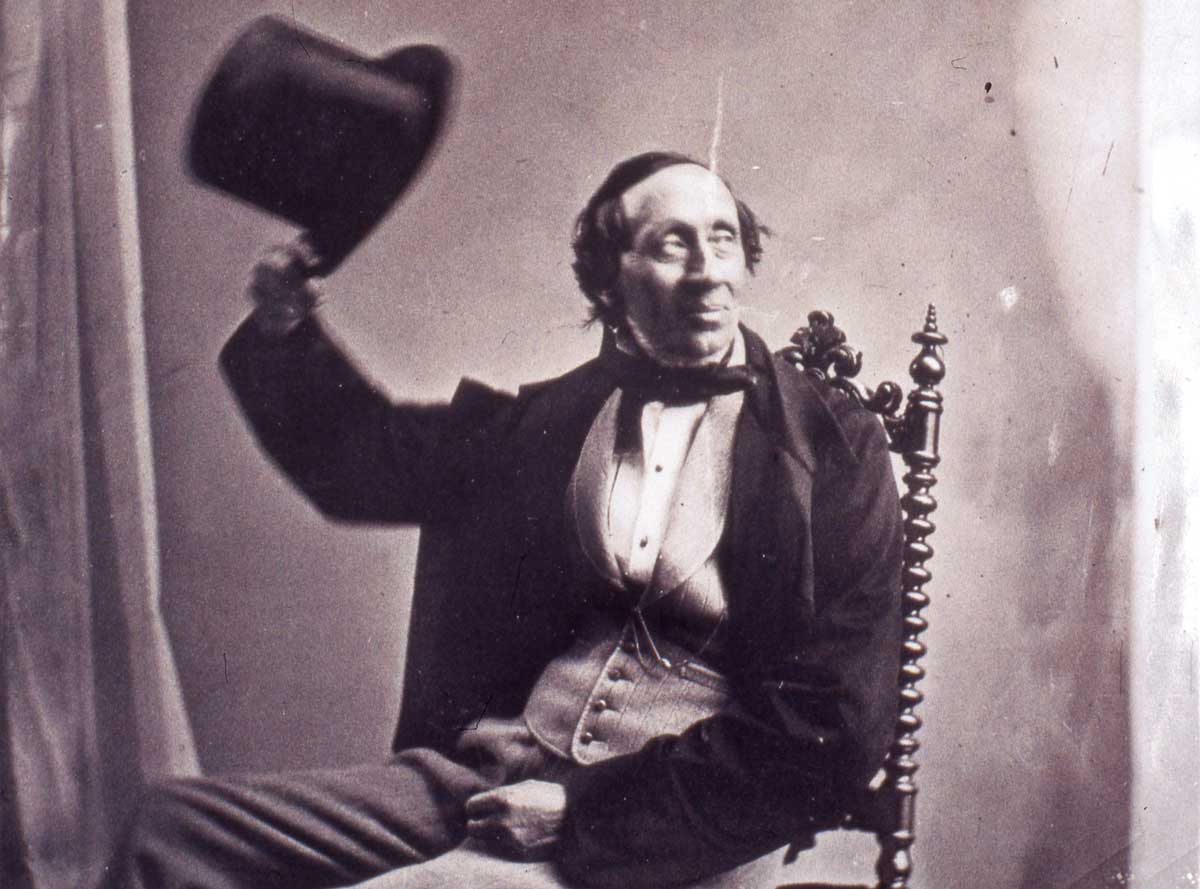
Hans Christian Andersen – a Danish icon
H.C. Andersen loved to travel and is known for saying “to travel is to live”. He amazed his contemporaries with his extensive travels. He spent almost five years of his life travelling within Denmark’s borders, and more than nine years travelling abroad – primarily in Europe, but also to Turkey and Morocco.
In total, he undertook 30 journeys abroad. H.C. Andersen jokingly said that he suffered from “wanderlust”; in springtime he would be seized by an urge to travel and had to set off. He therefore compared himself to the tall, lanky stork, believing he shared the migratory bird’s nature.
H.C. Andersen’s travels were not, as was common at the time, health retreats. His journeys were cultural travels. He wanted to experience places he had read or heard about. He wanted to see the landscapes where other poets had found inspiration, visit Europe’s major cities, their theatres and galleries, seek out historical sites and monuments. And he wished to connect with the artists and colleagues he admired.
It did not take long before, through translations of his works, H.C. Andersen became so popular and renowned that the doors to Europe’s artists, royal courts and princely houses were open to him. In his birthplace of Odense, his museum – H.C. Andersen’s House – welcomes visitors from all over the world every day.
Find more information about the museum at hcandersenshus.dk/en/