Rising passenger numbers drive growth at Copenhagen Airport
The 100th anniversary year of Copenhagen Airport is now part of history. It became the year with the highest number of passengers ever at the airport. There have never been better air connections between Denmark and the world, and this is positive for society as a whole.
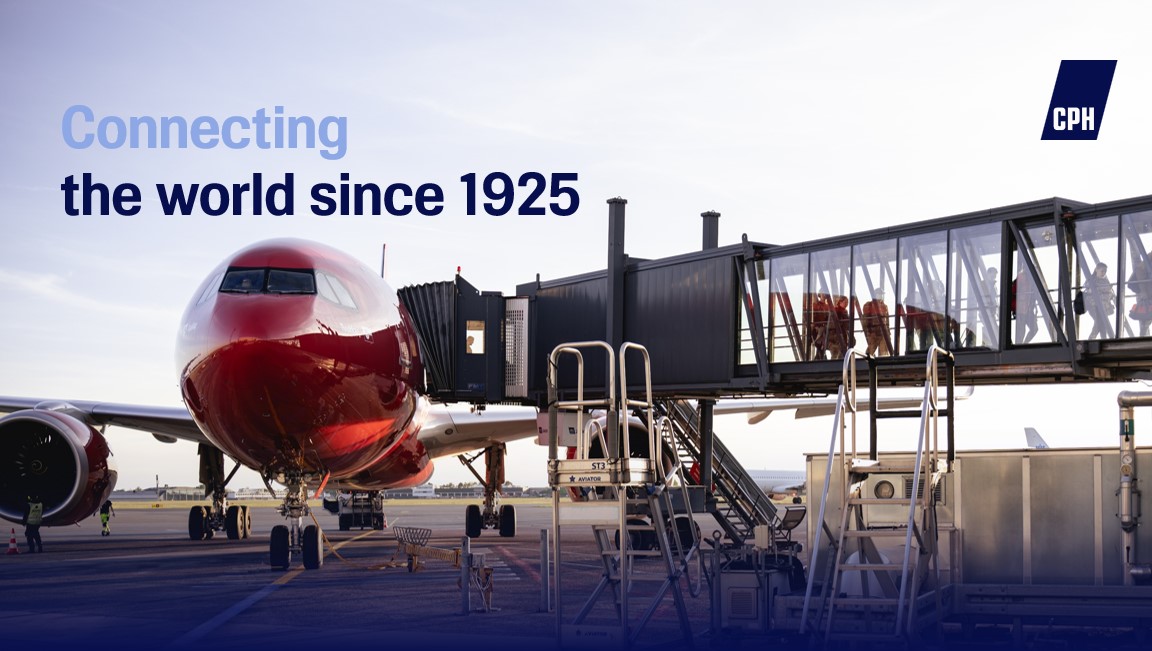
The number of travellers has never been higher at Copenhagen Airport. A total of 32.4 million travellers passed through the airport’s terminals in 2025, which was also the year in which the Danish state acquired the controlling shareholding in Copenhagen Airports A/S, and the state now owns 99.6 per cent of the shares.
“The significant increase in the number of travellers to and from Copenhagen Airport is due to the fact that more airlines have opened new routes and increased the number of departures on existing routes. We are, of course, very pleased with this. Globally, the appetite for travel is strong, and two out of three passengers at the airport are international travellers,” says Christian Poulsen, CEO of Copenhagen Airport.
The total number of passengers was nine per cent higher than the previous year, and the rising number of travellers means that Copenhagen Airports A/S ended the year with a profit before tax of DKK 1,625 million, which is 21 per cent higher compared to the year before.
Highest revenue ever
Total revenue in 2025 amounted to DKK 5,521 million, corresponding to an increase of nine per cent compared with the previous year. This is the highest revenue in the airport’s history.
Aeronautical revenue from air traffic amounted to DKK 3,361 million, while non-aeronautical revenue, which includes income from the shopping centre, parking operations and the leasing of buildings and premises, amounted to DKK 2,160 million.
Good connections to the world create value
The opportunities to travel out into the world from Copenhagen Airport have never been better. And with the highest number of routes ever, Denmark is more accessible to the rest of the world.
In 2025, airlines opened 47 new routes from Copenhagen, which meant that during the year there were 367 routes with direct connections to 191 different destinations worldwide.
“It benefits society as a whole when Danish companies have easy and direct access to the world from Copenhagen. The strong connections also attract international companies and skilled labour and benefit Danish tourism. This is felt in shops, restaurants and hotels across the country and creates jobs,” says Christian Poulsen.
During the year, Copenhagen Airport welcomed five new airlines with routes to, among other places, China, India and Vietnam. In total, 63 airlines operated routes to and from Copenhagen, with SAS and Norwegian being the largest.
New long-haul routes from Copenhagen
The majority of routes from Copenhagen Airport are within Europe, and eight out of ten passengers at the airport travelled to or from a European destination. In 2025, there were eight per cent more travellers between Copenhagen and European countries compared with the previous year.
Growth was even greater on the long-haul routes. Here, the number of passengers increased by 10 per cent, and a total of 12 new long-haul routes were opened, meaning that in 2025 there were 49 routes outside Europe.
“The long-haul routes help strengthen our position as an important hub with good connections to the rest of the world. The strong connections also mean that more travellers use Copenhagen Airport as a stop on their way to their final destination,” says Christian Poulsen.
In 2025, 7.2 million travellers transferred at Copenhagen Airport. This corresponds to more than one in five passengers at the airport and represents a 27 per cent increase compared to the year before.
More airlines grow in Copenhagen
The vast majority of airlines at Copenhagen Airport experienced growth in 2025. This also applied to SAS, Norwegian and Ryanair, which are the largest airlines at the airport and together accounted for 62 per cent of all passengers.
SAS is the largest airline at Copenhagen Airport and last year had a passenger share of 38 per cent, which is an increase compared with the previous year, when the share was 33 per cent.
“SAS has grown significantly at Copenhagen Airport. In 2025, the airline opened 27 new routes, while additional departures were also added on a number of existing routes. This means that SAS has increased the number of passengers at the airport by 26 per cent compared to the year before, and we are very pleased with this,” says Christian Poulsen.
Developing for the future
The rising demand for air travel to and from Copenhagen Airport requires more capacity in the future. The airport is therefore investing in the development of areas and facilities to ensure that the infrastructure keeps pace with the need for growth.
In 2025, Copenhagen Airport made total investments of DKK 2,157 million.
“It is crucial that we are able to meet future demand and ensure a good experience for passengers at the airport. Among other things, we are working on establishing new aircraft stands, and we are well underway with the expansion of Terminal 3, which is one of the most extensive construction projects in the airport’s history. Balancing the need for growth with the ambition to minimise our climate footprint is a complex task. But it is absolutely necessary. And it is a task we take very seriously and have set ambitious targets for,” says Christian Poulsen.
Copenhagen Airport has a target of reducing emissions from its own operations by at least 90 per cent by 2030, compared with 2019 levels. The remaining emissions will be offset through recognised climate credits in order to achieve Net Zero operations.
A large proportion of the airport’s vehicles and equipment is electrified, and on 1 July 2025 the airport switched to using HVO biodiesel, which has a climate impact up to 90 per cent lower than fossil diesel. In addition, the airport’s electricity consumption is covered by renewable energy from Danish offshore wind farms in the North Sea.
“I am convinced that we will reach our 2030 climate target. However, the biggest challenge for the industry is aircraft emissions, which can only be reduced by using fossil-free aviation fuels,” says Christian Poulsen.
New terminal area and new security screening
As part of the airport’s development, Terminal 3 is being expanded by 60,000 square metres, creating more space, light and air for passengers. The expansion will include new shops and dining opportunities, a larger and more efficient baggage reclaim area and an expanded passport control area. The expansion is expected to be completed in 2027.
The first new 3D scanners in the security screening area were introduced in 2025. The new security lanes provide passengers with a smoother journey through security, allowing electronics to remain in hand luggage and enabling passengers to keep watches, shoes and belts on. The technology makes the new security lanes faster and allows the airport to handle the growing number of passengers. The new security screening area, consisting exclusively of 3D scanners, will be ready by the summer.
Outlook for 2026
This year, Copenhagen Airport expects continued growth in passenger numbers, which will lead to higher revenue.
The expectation is passenger traffic of approximately 35.5 million and revenue growth of 7 per cent.
If passenger numbers reach around 35.5 million, profit before tax for 2026 is expected to be between DKK 1.75 and 1.90 billion.
However, there is uncertainty regarding the outlook due to geopolitical and macroeconomic factors that may potentially have a negative impact on the desire to travel and, consequently, on financial expectations.